
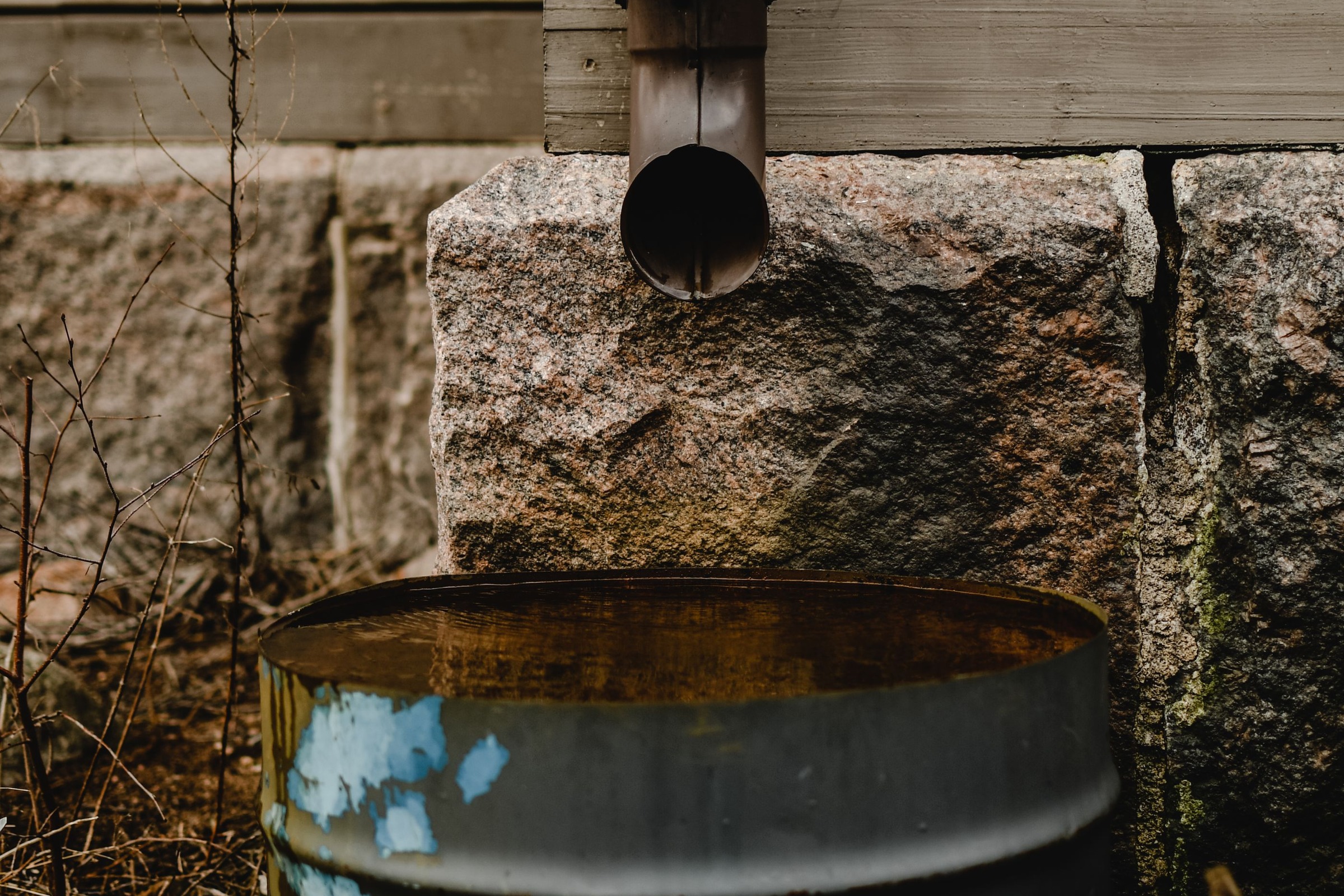
How long do eavestroughs last? On the aluminum troughs hung on most Toronto homes, the usual range is about 20 to 40 years. Copper can go 50 years or more. Those figures come from InterNACHI’s estimated life expectancy chart for home components (InterNACHI life expectancy chart), and they assume normal wear and regular upkeep. Real houses don’t read the chart. We’ve pulled troughs off homes that gave out well short of 20 years, and we’ve seen others outlast the roof above them. The difference nearly always comes down to how they were hung and how they were looked after.
We repair, clean and replace eavestroughs all over the city. Below: what wears them out, what keeps them going, and how to tell yours are close to done.
Not sure if your eavestroughs need repair or replacement? Request a free estimate and we will check them. Call (416) 860-5976 or request a free estimate online.
It sets the ceiling. Aluminum is what most Toronto houses have. It doesn’t rust, it’s light, and it comes in a long list of colours, and with care it runs roughly 20 to 40 years. Galvanized steel is stronger, but the coating wears off and rust starts at seams and scratches, so in practice it often quits before aluminum. Copper lasts a very long time and goes green, though you mostly see it on heritage houses in the Annex or Rosedale and on high-end builds. Vinyl is less common here. It turns brittle and can crack in a deep January cold snap.
Ranges, all of them. Not promises. A well-hung aluminum trough on a house with few trees can beat the top of its range, and a badly pitched one under a big silver maple might fail in half the time.
Toronto winters are hard on eavestroughs. Snow slides off the roof into the trough and freezes there, piling on weight it was never built for. Ice dams at the roof edge push meltwater into the trough, and that freezes solid too. A few winters of this and hangers bend, and whole sections start pulling off the fascia. Our page on ice dam removal explains how we handle ice at the roof edge.
Leaves, shingle granules and seeds trap water in the trough. Standing water is heavy. It speeds up wear at the seams, and when it spills over the front edge it soaks the fascia and the soil right against your foundation. Regular eavestrough cleaning does more for their lifespan than anything else.
Eavestroughs need a slight fall toward the downspouts. When the pitch is flat, or actually running backwards, water sits in there all year. A sag in the middle of a run usually tells us the hangers have worked loose or the fascia behind them has gone soft.
Sectional troughs have a joint every few metres, and each joint relies on sealant. Sealant dries out, then freeze and thaw cracks it. One-piece eavestroughs are formed on site in a single length, so the only joints are at corners and outlets. Far fewer weak spots.
A trough is only as strong as the fascia it’s screwed into. Water spilling over the front or leaking out the back slowly rots that board, and the hangers lose their grip. That’s why our soffit and fascia work so often happens alongside an eavestrough repair.
A rainy afternoon is when to look. Sagging runs, or troughs leaning away from the wall, are the obvious ones. Water pouring over the front edge of a trough you know is clean is another. Drips at seams and corners. Peeling paint, stains or soft wood on the fascia. On steel troughs, rust spots or pinholes. Down at ground level, puddles, washed-out mulch or a little gully along the foundation all point back up at the eavestroughs, and so can a damp basement wall after a storm.
One or two of these usually means a repair. Several at once, on troughs 20 years old or more, and replacement usually makes more sense.
We look at age, material and how far the damage has spread.
A few leaking seams get resealed. A loose section gets new hangers. A downspout that came apart or plugged up gets put back together or cleared. That’s ordinary eavestrough repair, often a short visit.
Replacement starts to make sense when most of the run sags or leaks, when steel has rusted through, or when the fascia is rotten and has to come off anyway. A new roof is a good moment too, because the drip edge and new troughs can be set together. Our eavestrough replacement page explains how we take the old ones down and put new ones up.
Twice a year is the minimum for cleaning, once in late spring and again in late fall after the leaves are down. After a big storm it’s worth a walk around the house looking for loose sections and plugged downspouts. Branches trimmed back off the roof help. A small leak fixed this month doesn’t get a whole season to rot the fascia.
Where the downspout sends the water matters as much as the trough. In Toronto, many downspouts have to be disconnected from the sewer system under the city’s mandatory downspout disconnection program, and the water should land on the ground away from the house, not in a neighbour’s yard (City of Toronto downspout disconnection). Getting that right protects the foundation and the eavestroughs together, since a blocked underground connection backs water straight up the downspout.
We get asked constantly. A screen over the trough can help. Guards keep out a lot of the big leaves, so fewer clogs and less standing water. They don’t let you stop checking, though. Fine debris, shingle granules and seeds still build up under many guard styles, and in winter ice can form right on top. If you’ve got guards, a look each spring and fall and after a major storm still makes sense. Thinking of adding them? Ask when we’re out to inspect, because the right style depends on the trees around your house and the pitch of your roof.
The team at Trusted Roofers Toronto wrote this. We’ve been doing roofing and eavestrough work in Toronto and the GTA for about 20 years, including eavestrough maintenance, repair, replacement and downspouts. More about our company.
Usually about 20 to 40 years, depending on how well they were installed and how often they are cleaned.
They tend to leak less over time because there are fewer seams to fail, which helps them reach the upper end of their expected life.
At least twice a year, in late spring and late fall. Homes under large trees may need more frequent cleaning.
If they are older or sagging, it usually makes sense. It is easier to set the drip edge and new troughs together than to fit old troughs to a new roof.
Often. New hangers and a corrected pitch can fix it, as long as the fascia behind it is sound.
We service eavestroughs throughout Toronto, including North York, Etobicoke, Scarborough and East York, from our office at 716 Garyray Drive. If your troughs are sagging, leaking or getting old, call us or request a free estimate.
Trusted Roofers Toronto
716 Garyray Drive, North York ON M9L 1R3
Phone: (416) 860-5976
Hours